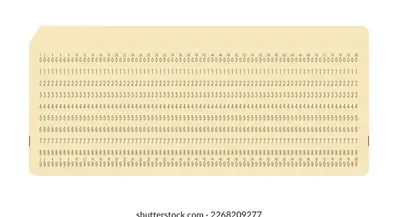
The Past: The Tactile Era
Before IDEs, coding was physical. The "First Programmer," Ada Lovelace, theorized loops before hardware even existed. Early giants didn't just write logic; they managed "mercury delay lines" for memory. A fact most miss: The Apollo 11 Guidance Computer ran on "Core Rope Memory"—literally hand-woven wires. Coding was a textile art where a single physical knot represented a bit. If you think your merge conflict is hard, imagine debugging a literal loose thread in your RAM.
The Present: The Era of Orchestration
We face Legacy Debt today. Even as we adopt new languages like Rust or Go, COBOL still runs 80% of global credit card transactions. We have shifted from writing every line to orchestrating existing tools. Modern developers act like DJs who mix APIs and NPM packages instead of architects. In an interesting quirk, engineers prototyped JavaScript in just 10 days, but its unique rules still form the base of the web. We do more than just code; we manage deep layers of old technology.
The Future: Beyond the Syntax
The "Senior Developer" of 2026 isn't a syntax expert—they are an LLM Orchestrator. As Natural Language Programming matures, the "How" (syntax) matters less than the "What" (logic and intent). We are moving toward Quantum Parity, where boolean logic (True/False) is replaced by Qubits. The future coder won't "type" functions; they will audit AI-generated architectures for security and scalability.
The Immediate Future: The AI Pair-Programmer
The most immediate change is the widespread adoption of AI pair-programming tools. These tools are not just fancy auto-completion; they actively suggest complex, multi-file code structures and identify security vulnerabilities before compilation. This transforms the role of the junior developer. They now learn by auditing and refining AI suggestions, accelerating their path to expertise. The biggest challenge for teams today is not learning to code, but learning how to effectively manage and guide their new AI partners, ensuring ethical and robust outcomes. This collaborative workflow marks a major shift from solitary coding to a guided, automated development pipeline. We see a future where every line is a joint decision.