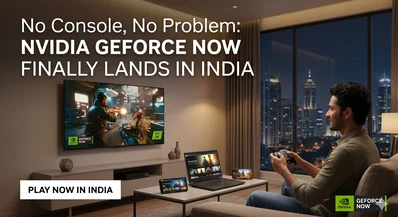
This Thursday, April 16, marks a watershed moment for the Indian gaming ecosystem. Nvidia is officially flipping the switch on GeForce Now India, ending a long wait that had many wondering if cloud gaming would ever truly survive India’s unique infrastructure challenges.
Infrastructure: The Mumbai & Chennai SuperPODs
Nvidia isn't cutting corners by renting third-party rack space. They have deployed proprietary RTX 5080 SuperPODs based on the Blackwell architecture, hosted right in Mumbai and Chennai. This architecture is designed to combat "jitter"—the micro-fluctuations in internet speed that often ruin cloud gaming experiences.
The Strategy of "Access Over Ownership"
In a market where a physical RTX 5080 card retails for over ₹1,20,000, Nvidia’s cloud model is a direct assault on the "PC Master Race" gatekeeping. For a monthly fee expected to be less than the price of a single AAA game, users get:
- 4K / 120fps Streaming: Latency-optimized for the 5G networks now blanketing Indian metros.
- Zero Downloads: Play Resident Evil Requiem or International Edition Cricket 26 instantly on a 5-year-old MacBook or a budget Android phone.
Why This Matters for 5G Adoption
Telecom giants like Jio and Airtel are expected to bundle GeForce Now with their high-end 5G plans. For these telcos, gaming is the "killer use case" that justifies the investment in 5G infrastructure. If you can play a competitive shooter like Counter-Strike 2 with sub-20ms latency on a mobile connection, the console as we know it is dead.