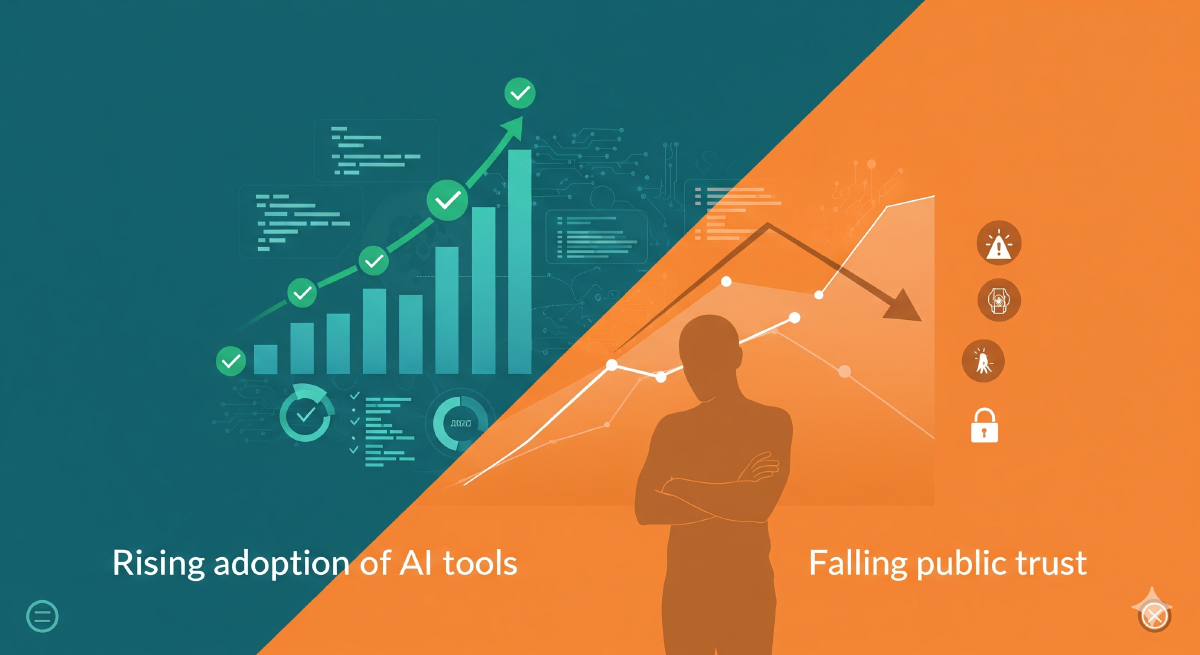
The latest data from the Quinnipiac University Poll reveals a striking contradiction in the American relationship with artificial intelligence: we are using it more than ever, yet we trust it less than ever before. For tech leaders and developers, this "trust gap" represents a significant hurdle. While the novelty of LLMs has transitioned into utility, the public’s skepticism regarding the accuracy and safety of these systems is hardening.
Adoption is Scaling, But Skepticism is Winning
The poll indicates a clear uptick in daily usage. Whether it’s for drafting emails, coding assistance, or creative brainstorming, AI is no longer a niche interest; it’s a functional layer in the modern economy. However, this familiarity has not bred content. Instead, 55% of Americans now believe that AI will ultimately do more harm than good in their daily lives.
This isn't just a fear of the unknown—it's a reaction to the known. As users encounter hallucinations, biased outputs, and data privacy concerns firsthand, the "black box" nature of these models is coming under intense scrutiny.
The Geography of Anxiety
The friction isn't just digital; it’s physical. One of the most telling findings from the study is the rising opposition to the infrastructure that powers the AI boom. Approximately 65% of respondents expressed opposition to the construction of new data centers in their local communities.
For the tech industry, this signals a looming "NIMBY" (Not In My Backyard) crisis. The massive energy and water requirements of next-generation clusters are clashing with local environmental concerns, suggesting that the expansion of AI will face as much resistance on the ground as it does in the cloud.
A Mandate for Transparency
What does this mean for the next phase of development? The "move fast and break things" era of AI deployment is hitting a wall of public sentiment. To bridge this divide, the industry must pivot toward "Trust by Design." This includes:
- Verifiable Accuracy: Moving beyond "plausible" answers to grounded, traceable facts.
- Ethical Guardrails: Implementing robust governance that outpaces the speed of deployment.
- Local Engagement: Addressing the environmental footprint of data centers before breaking ground.
The data is clear: Americans are willing to use the tools, but they aren't ready to believe them. For AI to reach its full potential, the industry must stop focusing solely on what the technology can do and start proving what it won't do.