The Evolution of the Last Mile
The logistics industry underwent a paradigm shift in the early 2000s as the internet age redefined e-commerce. Like many legacy sectors, logistics has evolved through radical innovation across its core pillars: warehousing, distribution, and fulfillment.
Technology and automation have been the primary catalysts for this growth. We have seen the rise of automated fulfillment centers powered by Robotics and AI, distribution networks optimized by Machine Learning, and delivery systems defined by real-time tracking. This infrastructure has shrunk delivery windows from weeks to hours. In markets like India, the "Quick Commerce" revolution has further pushed these boundaries, bringing essentials to doorsteps in under 10 minutes.
From Internal Solution to Market Leader
Amazon is no longer just a participant in logistics; it is the benchmark. For decades, the company has relentlessly iterated on every link of its e-commerce supply chain. Today, Amazon’s warehouses are largely autonomous, managed by humans but driven by sophisticated robotics. This mastery wasn't an accident—it was a 30-year journey of refining internal operations to support its own retail dominance.
This trajectory mirrors the origin story of AWS. Amazon Web Services was born from the need to solve internal scaling and infrastructure challenges. When it was opened to the public in 2006, it transformed the company. Today, AWS is the primary engine of Amazon’s operating income, proving that Amazon’s greatest products are often the tools they built for themselves.
Opening the "Brown Box" to the World
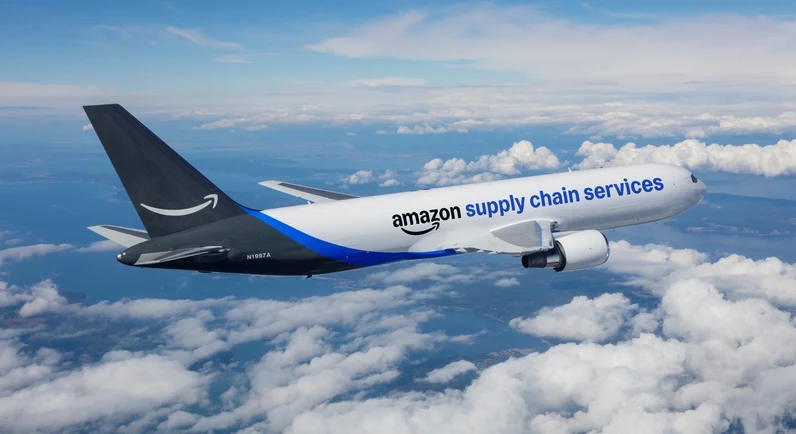
Recently, Amazon officially expanded its Supply Chain Services. With enterprise giants like 3M and Procter & Gamble already integrated into the network, Amazon is now opening its logistics doors to businesses of all sizes. Whether a legacy corporation or a burgeoning startup, any brand can now leverage the same global infrastructure that powers Amazon.com.
The stakes are massive. Analysis from the World Economic Forum suggests the logistics market could reach $18 trillion by 2030. With Amazon’s deepening expertise in AI—bolstered by its multibillion-dollar partnership with Anthropic—it has the unique capability to apply generative models to complex global supply chain routing and predictive inventory.
Entering the third decade of its logistics journey, Amazon is no longer just a "competitor" to existing carriers. It is a fundamental infrastructure provider that every player in the global market must take seriously.