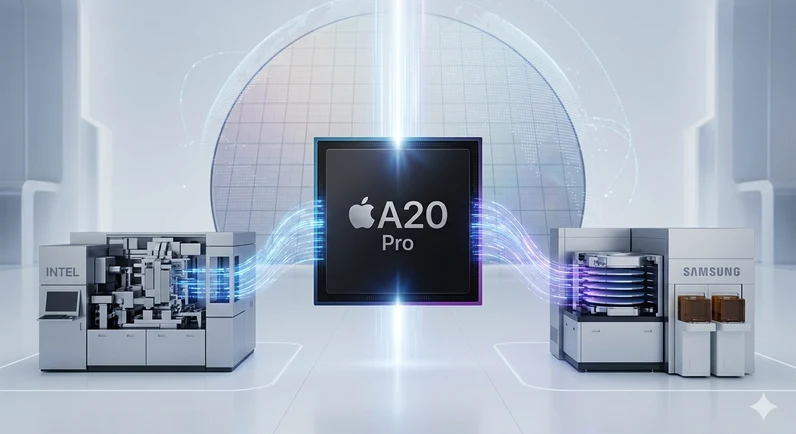
The decade-long agreement between Apple and TSMC might come to an end. According to recent industry reports, Apple explores using Intel and Samsung to manufacture its next generation of A-series and M-series processors.
While Apple has not officially confirmed these talks, the move aligns with a broader industry push for "de-risking". In today's scenario, relying on a single geographic point - Taiwan - for 100% of its most critical components is a vulnerability Cupertino can no longer ignore.
The Multi-Foundry Strategy
By vetting Intel’s Foundry Services (IFS) and Samsung’s advanced nodes, Apple is playing a long-term game of leverage:
- Geopolitical Resilience: Diversifying away from TSMC provides a safety valve against regional disruptions.
- The Intel Advantage: Utilizing Intel’s 18A process would allow Apple to secure high-end, U.S. based manufacturing - a significant political and logistical win.
- Samsung’s Innovation: Apple is already reportedly exploring Samsung’s advanced three-layer stacked image sensors for the iPhone 18 Pro, suggesting a deepening technical trust.
The Engineering Hurdle
Switching foundries isn't a plug and play task. Porting designs from TSMC to Intel or Samsung’s Gate-All-Around (GAA) transistors requires massive engineering overhead. However, the payoff for the iPhone 19 and iPhone 20 is clear: a competitive auction for every wafer, ensuring Apple maintains its lead in both performance and pricing power.
The Bottom Line: Whether this is a genuine pivot or a masterclass in negotiation, Apple is ensuring its future silicon is never tied to a single point of failure.
Editor’s Note: While this report originated via Bloomberg, it mirrors a trend of supply chain resilience we’ve tracked since late 2025. Stay tuned for further technical analysis.