India is the most populous country in the world, with over 1.4 billion people, and some of its areas have the highest density per square km; it is a challenge to fulfill the growing needs and demands of people.
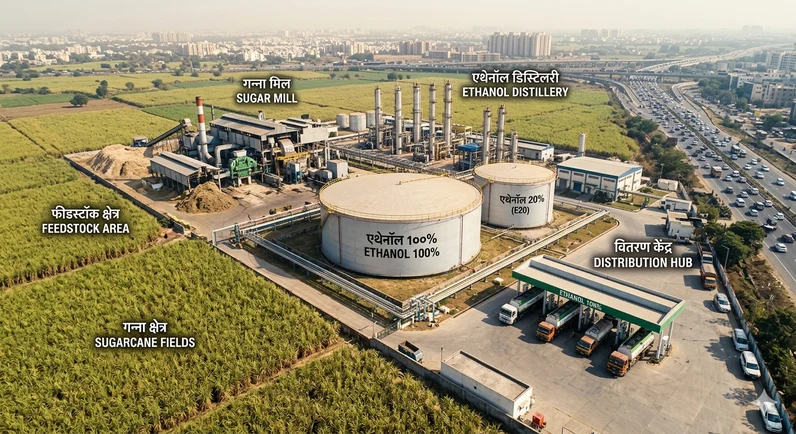
In a 2018 Ethanol Blend Programme, the Central government issued a directive to increase the ethanol blend to up to 20%. Led by the Transportation Minister Nitin Gadkari, the government was able to meet the target with E20 being effective just a few months ago. Now the rumors bubble up of even higher blending directives being drafted all the way up to 100%.
But why is India so aggressive on the target? There are a multitude of reasons behind it:
India is one of the largest importers of Crude Oil in the world. Being such a populous country, India needs to decrease its dependency on crude to bolster its economic position and make itself self-reliant.
Furthermore, Ethanol combustion is more environmentally friendly and offers higher octane. And it's renewable as compared to Fossil Fuels.
An increase in sugar production and ethanol production helps local farmers and merchants. However, production capacity is still a question.
Though with this directive, it is up to the car makers how quickly they can adapt to these changes, as ethanol is not as efficient, and many engines currently in the market are not completely suitable for higher blending.
This can mean one other thing. With a fresh push towards renewable energy, the government might want to compel people to think about other renewable options, like EVs. Although the EV market has its own challenges, which will be discussed in the future, one thing is quite clear: India is showing, by its actions, at least, that it wants to move away from Fossil Fuels.